
Which Style Reflects Your Spiritual Path?
Personal altars are deeply intimate spaces
Small worlds we build to anchor meaning, ritual, memory, and intention. But when it comes to how we build them, most people naturally lean toward one of two styles: minimalist or maximalist. Neither is better than the other. They simply express different internal landscapes.
Below, we’ll explore the traits, advantages, and energies of each, plus tips for finding the altar style that resonates most with you.
The Minimalist Altar

A minimalist altar is all about clarity, intention, and presence. Every item has a purpose. Nothing is extra.
Characteristics
- Clean lines, open space, neutral or natural tones
- Only a few key objects—perhaps a candle, a stone, a photograph, a plant
- A feeling of calm and quiet focus
Why People Choose Minimalism
Minimalist altars speak to those who crave:
- Mental clarity and simplicity
- Distraction-free meditation
- A sense of spaciousness or peace
- A desire to avoid clutter or overwhelm
With fewer objects, each piece carries significant symbolic weight. A single stone can hold an entire intention. A candle can represent a whole ritual cycle.
Tips for Creating a Minimalist Altar
- Pick 3–5 objects that feel essential.
- Choose natural elements (wood, stone, water, plant life).
- Keep your color palette simple.
- Use negative space intentionally—it’s part of the altar’s energy.
The Maximalist Altar
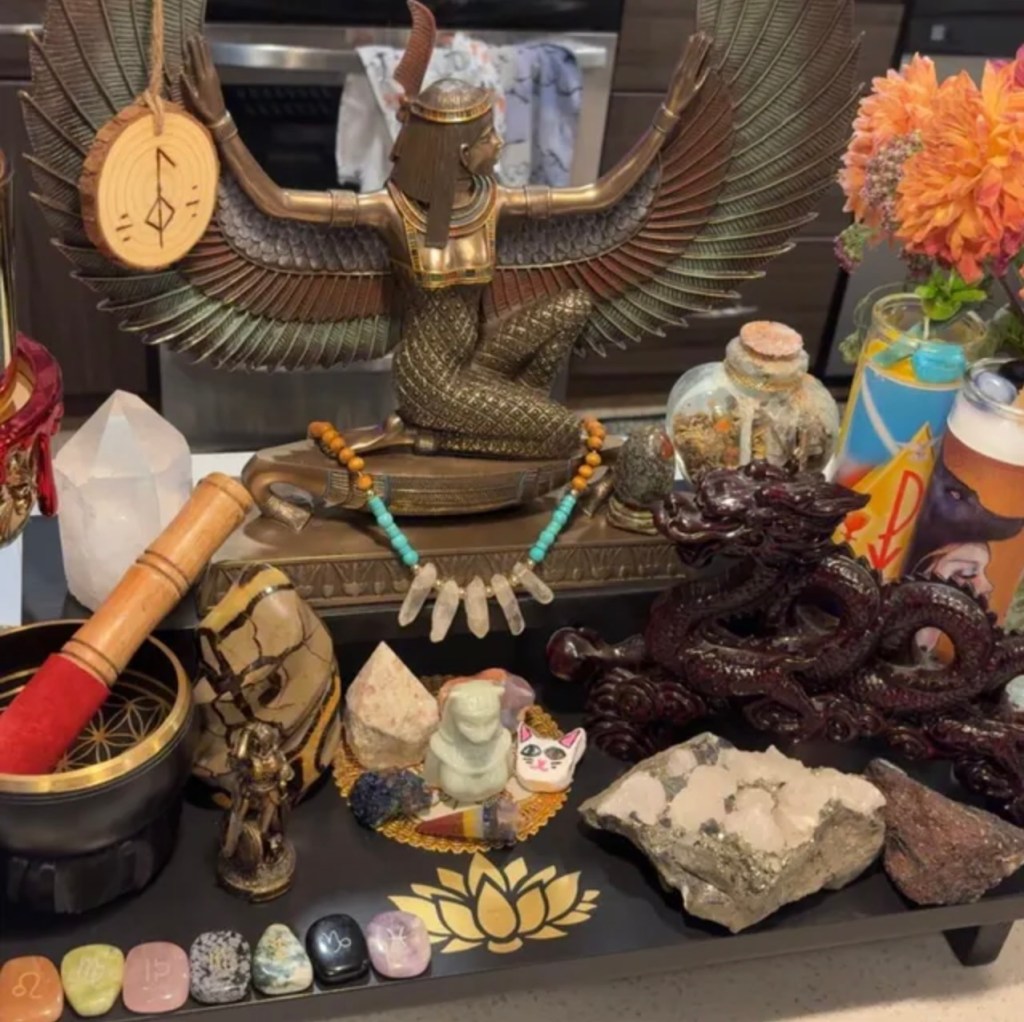
A maximalist altar is abundant, expressive, and alive. It’s a visual tapestry of your inner world.
Characteristics
- Layers of textures, colors, symbols, and natural objects
- Sentimental treasures, found items, and spiritual tools
- A sense of warmth, personality, and sacred chaos
Why People Choose Maximalism
Maximalist altars resonate with those who love:
- Symbolic richness and layered meaning
- Celebrating beauty and abundance
- Collecting, curating, and honoring many aspects of self
- Creating sensory environments that feel alive
Each object contributes a piece of your personal mythology. Together, they form a small ecosystem of spiritual support.
Tips for Creating a Maximalist Altar
- Build in layers: cloth → objects → plants → candles.
- Combine textures (metal, stone, fabric, wood).
- Let different spiritual or emotional themes coexist.
- Refresh the arrangement regularly to keep the energy flowing.
Which One Is Right for You?
Instead of choosing one lane, ask yourself these questions:
- Do I feel more grounded with simplicity or abundance?
- Am I energized by visual stimulation—or calmed by stillness?
- Does my altar reflect who I am today?
You may find that:
- Your altar changes with the seasons.
- Different altars in your home have different styles.
- You shift between minimalism and maximalism depending on your emotional landscape.
There’s no wrong approach—altars evolve just as we do.
Hybrid Altars: The Best of Both Worlds
Many people create a hybrid altar, mixing tidy structure with a few expressive, sentimental, or elaborate elements. Think:
- A simple wooden surface with a few favorite objects
- Plus one “abundant” area—like a bowl of collected stones or a cluster of candles
This approach keeps things visually calm but emotionally rich.
Final Thoughts
Your altar is a mirror of your inner life. Whether you gravitate toward the serene simplicity of minimalism or the joyful abundance of maximalism, the goal is the same: to create a space that feels alive, personal, and sacred to you.
 Everything Altars
Leave a comment