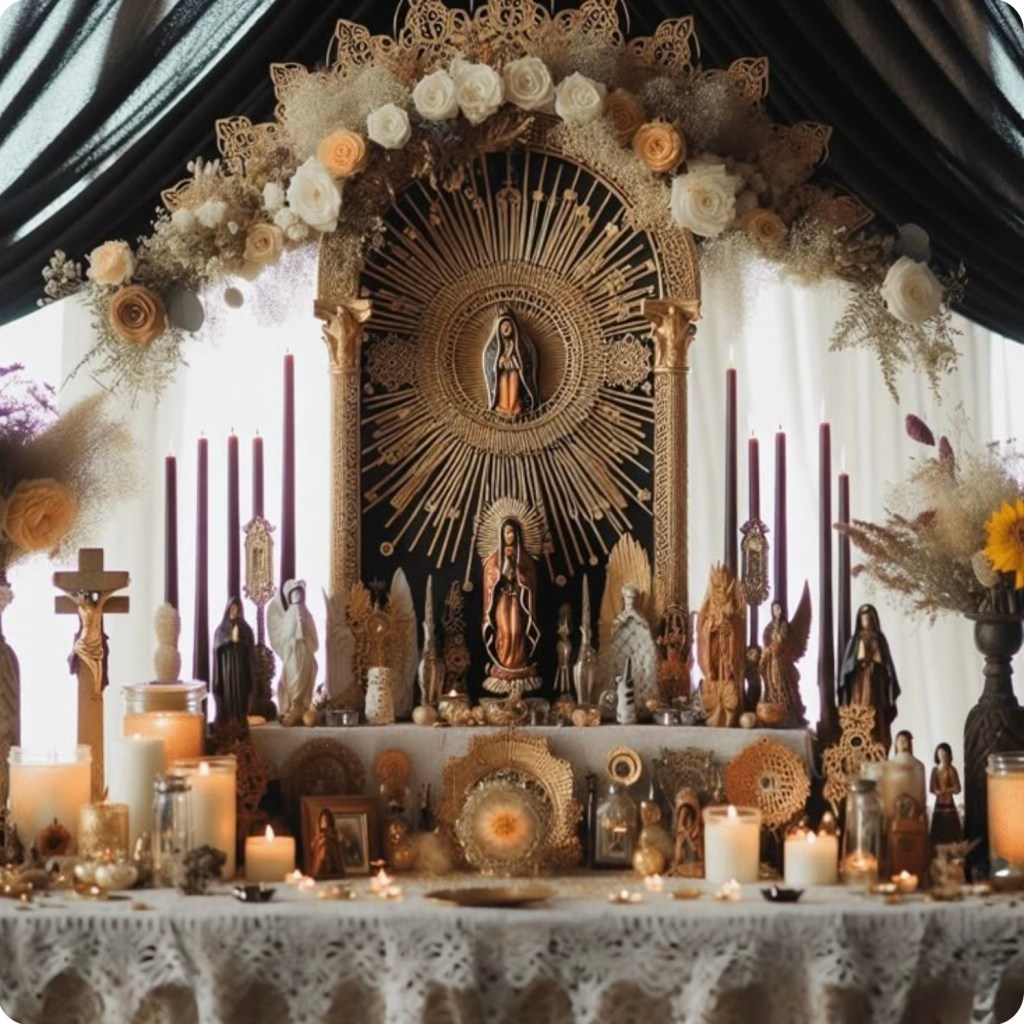
A sacred space across traditions, where the divine meets the human.
An altar is not just a collection of objects. It’s a container for presence — a space that invites spirit, intention, memory, and energy into the everyday. Whether found in a temple, a corner of your bedroom, or the forest floor, an altar is a portal between the physical and the spiritual.
But what exactly is an altar?
Let’s explore its meanings through different lenses: spiritual, cultural, personal, and energetic.
🕯️ 1. The Spiritual Perspective: A Place of Connection
From a spiritual viewpoint, an altar is a sacred space to commune with the divine — however you define that. It’s where prayers are whispered, offerings made, candles lit, and presence invoked.
Altars offer a focal point for meditation, intention-setting, or devotional practice. You might find them adorned with:
- Statues or symbols of deities
- Crystals, feathers, or natural elements
- Candles and incense
- Sacred texts or spiritual quotes
In many traditions, the altar is the heart of ritual — a place to return to again and again.
🌍 2. The Cultural Perspective: A Bridge Between Worlds
Altars appear in nearly every culture across the world:
- Catholicism: Altars in churches hold the Eucharist — the body and blood of Christ — and serve as the center of sacred ceremony.
- Hinduism: Home altars feature gods and goddesses, daily puja (prayer), flowers, and ghee lamps.
- Buddhism: Altars often include statues of the Buddha, incense, offerings of fruit or water, and serve as places of stillness and compassion.
- Mexican Dia de los Muertos: Altars (ofrendas) honor ancestors with photos, food, candles, and marigolds — a living memory of those who came before.
- African Traditional Religions: Altars may serve to connect with deities (Orishas), ancestors, and spirit guides.
- Pagan and Witchcraft Traditions: Altars are used to celebrate the seasons, lunar cycles, and magical workings with tools like athames, chalices, and herbs.
In all cases, the altar is a bridge — between the seen and unseen, the living and the dead, the personal and the cosmic.
🪷 3. The Personal Perspective: Your Inner Temple
A modern altar doesn’t have to follow any rulebook. It can be entirely personal, reflecting your beliefs, values, and emotional landscape.
A personal altar might include:
- A photo of someone you love
- A meaningful quote or affirmation
- A stone from a hike that changed you
- A cup of tea and a journal
- A single flower in a jar
What matters is that it feels sacred to you. It becomes a reflection of your inner world — a physical expression of your devotion, dreams, or healing.
🔥 4. The Energetic Perspective: A Power Source
Energetically, an altar is a battery of intention. The more you use it — to meditate, pray, journal, or offer gratitude — the more power it holds.
It’s not just décor. It’s a living space for energy to move through. You can feel this when you sit before it — a quiet, grounded presence that draws you inward.
Over time, your altar becomes a spiritual anchor, holding space for your growth, your grief, your joy, and your becoming.
🌿 How to Start Your Own Altar
You don’t need a big space or expensive tools. Here’s how to begin:
- Choose a surface – a small table, shelf, or windowsill.
- Clear and cleanse it – with smoke, salt, or intention.
- Add items that matter – natural elements, symbols, candles, or photos.
- Visit it often – even for one minute a day, to breathe or offer presence.
- Let it evolve – with the seasons, your moods, and your spiritual path.
🌙 Final Thoughts
So, what is an altar?
It’s a sanctuary, a mirror, a portal, and a practice. It doesn’t have to be fancy or follow rules. All it needs is your presence. Your altar is where the sacred meets the ordinary — where the soul comes home.
Search Here for some altar ideas and maybe choose an altar that suits you and your practice.
 Everything Altars
Leave a reply to Barroco Oscuro: Descubre la Belleza Tétrica del Arte Barroco – World Today Journal Cancel reply